

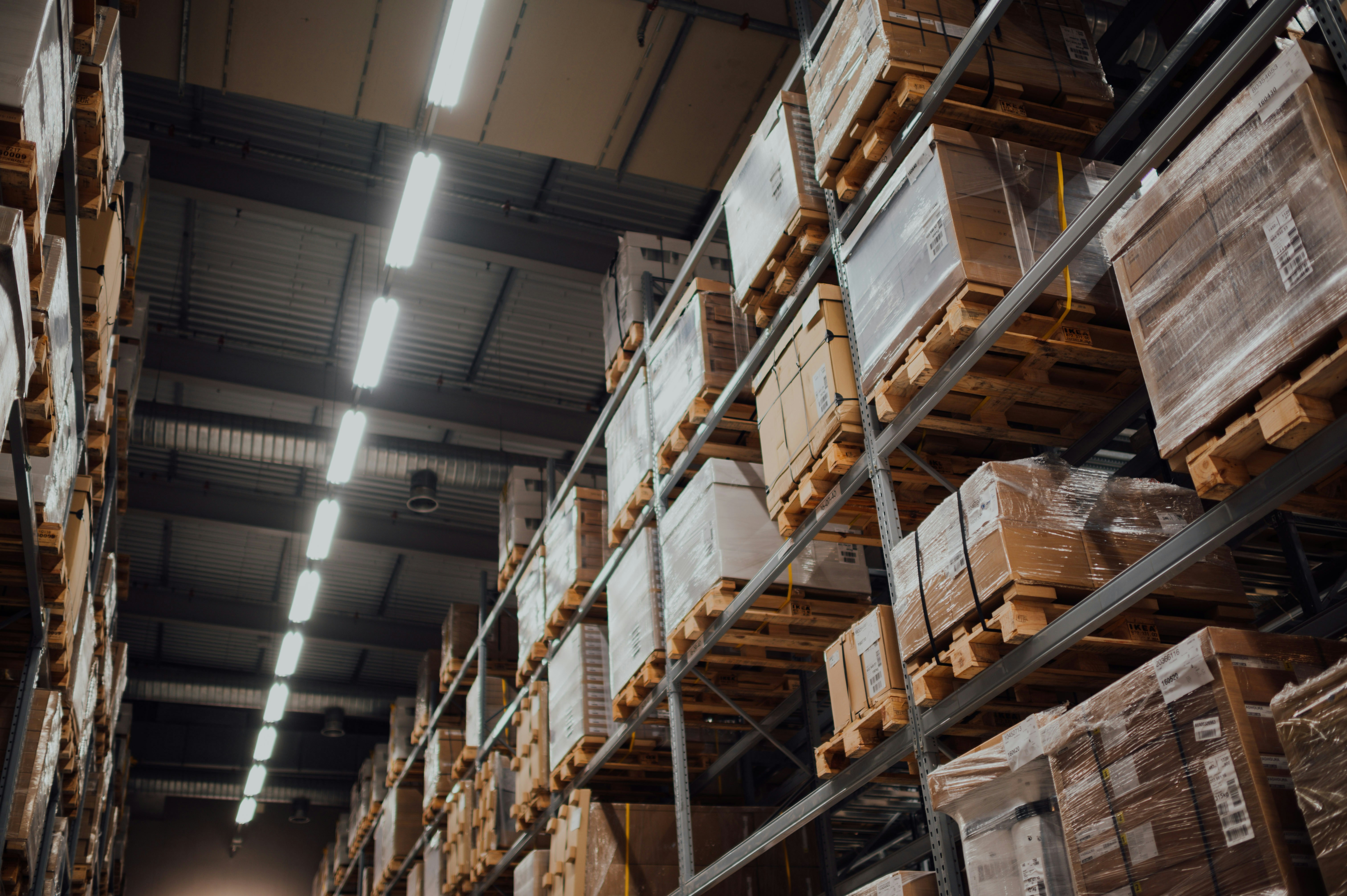
How robots, AI, and autonomous systems are rewriting the rules of logistics and why your competitors are already moving.
The warehouse is no longer what you think it is
Picture a facility of 80,000 square metres no forklifts driven by people, no workers walking kilometres every shift. This is not the future. It is happening right now, across Europe and the world. For decades, the warehouse was the unglamorous back-end of commerce a place of manual labour, clipboards, and long walking routes. Then e-commerce exploded. Labour markets tightened. Customer expectations for next-day (or same-day) delivery became non-negotiable. The industry had no choice: it had to automate, or be left behind.
Today, warehouse automation is one of the most active investment areas in the global IT and logistics landscape. In 2026, companies embracing robotic systems are seeing 25–30% reductions in labour costs, order fulfillment speeds three times faster than manual operations, and accuracy rates approaching 99%. These are not incremental gains they are competitive moats.
The machines behind the movement
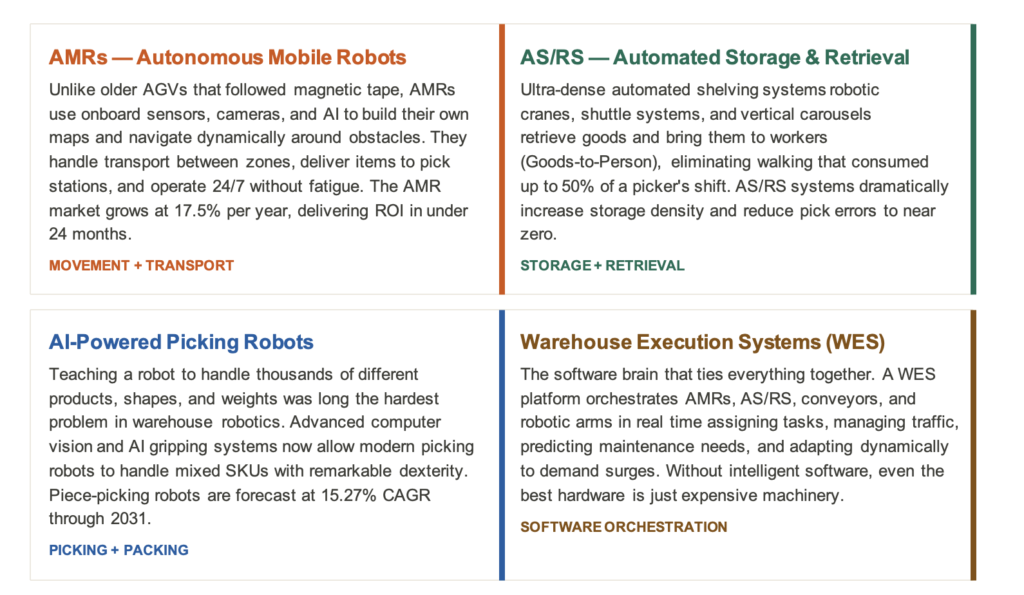
No single technology transforms a warehouse. It is the integration of several intelligent systems each with a distinct role that creates a truly automated operation. Here are the four pillars every IT company should understand and articulate clearly to clients.
“The global warehouse automation market is worth nearly $30 billion in 2026 andexperts project it will almost double by 2030. Companies that move now will set the pace. Companies that wait will spend the decade catching up.” Global Trade Magazine, March 2026
What automation actually delivers
Beyond the marketing claims, what does a real automation project produce? Numbers from live deployments tell a compelling story and they are precisely why investment budgets are increasing sharply across every segment of logistics. What is particularly striking is where investment is going.
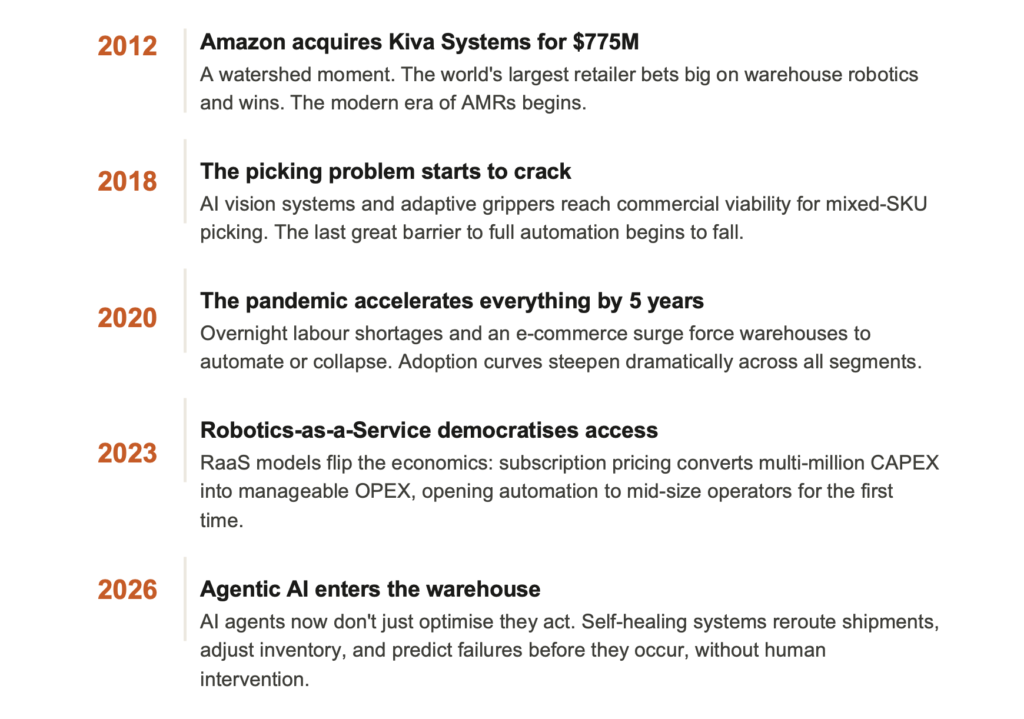
A decade of disruption
What happens to the people?
It is the question everyone in the room is thinking but not always asking. Automation does eliminate certain roles specifically, the most physically demanding, repetitive, and injury-prone tasks:
The picture is more nuanced than ‘robots take jobs.’ By 2026, warehouse operations are increasingly built around human-robot collaboration. Workers wearing AR headsets receive real-time guidance on complex tasks. Planners oversee fleets of AI-driven robots as system orchestrators. New roles have emerged: robot supervisors, fleet operations analysts, WES configuration specialists, and maintenance technicians.
The skill requirement has shifted upward, not disappeared. The challenge for companies and for IT solution providers is ensuring that workforce transformation plans are built alongside technology transformation plans. Automation without people strategy creates resistance. Automation with thoughtful reskilling creates resilience.
It is not without challenges
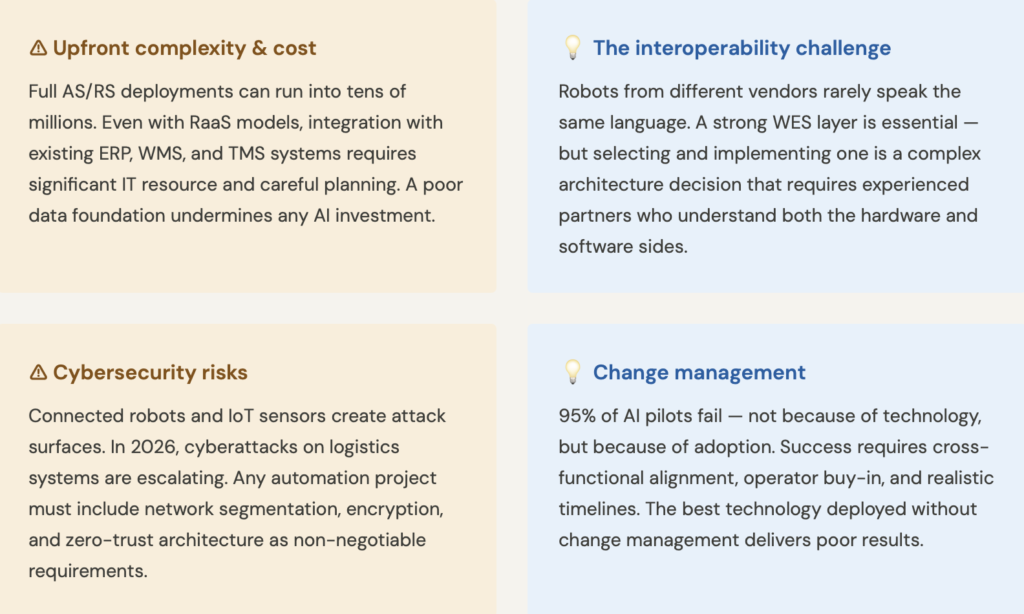
Every compelling technology story has friction points. Warehouse automation is no different, and credible IT partners will acknowledge these openly rather than glossing over them.
Where IT companies fit in
The warehouse automation market does not just need hardware manufacturers. It needs intelligent integrators companies that can bridge the gap between the robot on the warehouse floor and the ERP system in the boardroom. This is precisely where IT solution companies hold their greatest competitive advantage.
The clients asking these questions are not just logistics giants. They are food and beverage producers, pharmaceutical distributors, retail chains, and manufacturing companies all sitting on legacy systems, fragmented data, and a growing gap between where they are and where their competitors are going.
The conversation to have is not ‘here is a robot.’ It is: here is how we connect your entire operation into an intelligent, responsive system from inbound receiving to last-mile dispatch, orchestrated by software, powered by AI, and built to scale with your business. That is the pitch worth making. And in 2026, there has never been a better moment to make it.