

For decades, supply chain management has been a discipline defined by firefighting. It has been a reactive scramble to manage disruptions a missed shipment, a sudden spike in demand, a factory shutdown after they have already occurred. The goal of every logistics professional, however, is the opposite of chaos. Optimization is a journey, not a destination, but AI can bring a supply chain closer to “perfection” than ever before. It is the theoretically “perfect” supply chain: an ecosystem with zero waste, 100% real-time visibility, and instantaneous resilience to unexpected shocks.
While absolute perfection may remain an elusive ideal, Artificial Intelligence is moving the needle dramatically closer. By transitioning operations from reactive to proactive, AI is not just optimizing existing processes; it is fundamentally rebuilding the nervous system of global commerce. Here is how AI is driving performance across the four pillars of the supply chain to build the future of logistics. Here is how AI optimizes performance across the four key pillars of the supply chain (Plan, Source, Make, Deliver) to approach that ideal state.
Planning: The Brain of the Supply Chain
Traditional supply chain planning relies heavily on historical data. Companies look at what they sold last year to guess what they will sell next month. In a volatile world, this rear-view mirror approach is often disastrously inaccurate. AI transforms planning from reactive (fixing problems) to proactive (preventing them).
- Demand Forecasting (Predictive Analytics): Traditional forecasting looks at last year’s sales. AI models analyze hundreds of variables weather patterns, social media trends, economic indicators, and competitor pricing to predict exactly what customers will want before they know it themselves, that reduced overstock (waste) and stockouts (lost revenue).
- Digital Twins: AI creates a virtual replica of your entire supply chain. You can run simulations (“What if a port in Shanghai closes?”) to see the impact instantly and test solutions without risking real money.
Sourcing: Intelligent Procurement
In a globalized economy, a single faulty component or a geopolitical event halfway across the world can halt an entire production line. Sourcing has traditionally focused on cost reduction, often at the expense of resilience. AI helps you choose the best suppliers, not just the cheapest ones.
- Supplier Risk Management: AI scans news, financial reports, and geopolitical data 24/7 to flag risks. If a supplier is in a region facing political instability or a labor strike, the AI alerts you days or weeks in advance.
- Automated Negotiations: Simple procurement tasks can be handled by AI bots that negotiate standard contracts with suppliers based on pre-set parameters, freeing human teams to focus on strategic partnerships.
Making: Smart Manufacturing
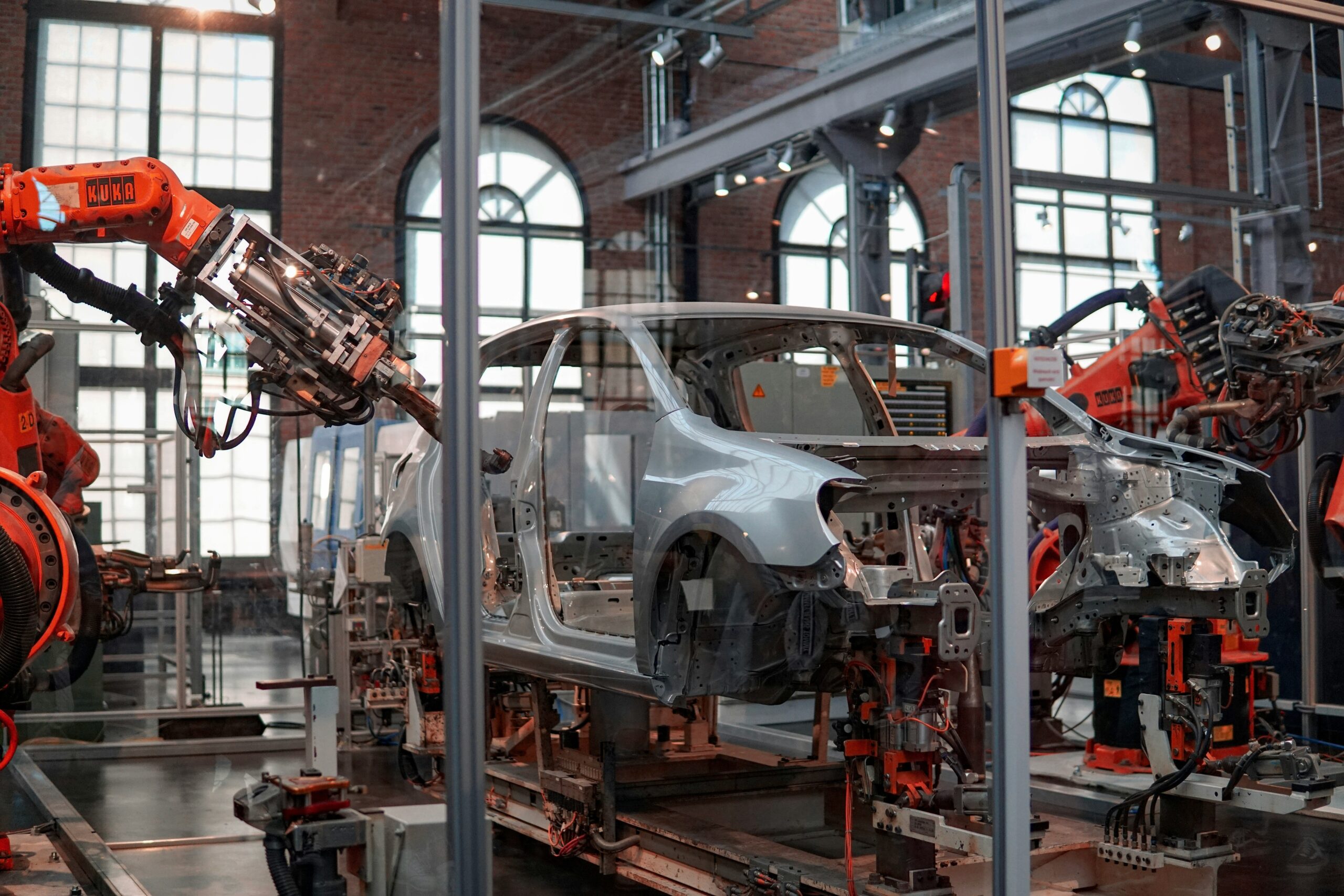
In the factory, AI ensures consistency and prevents downtime. Within the four walls of a manufacturing plant, “perfection” means maximum uptime and consistent quality. AI is critical to achieving both.
- Predictive Maintenance: Instead of fixing a machine when it breaks (downtime), AI sensors analyze vibration and heat data to predict failure. “The conveyor belt bearing will fail in 48 hours.” You fix it during a scheduled break.
- Computer Vision for Quality Control: AI-powered cameras inspect products on the line faster and more accurately than the human eye, spotting microscopic defects and ejecting faulty items immediately.
Delivering: Logistics & Fulfillment
This is where the “Amazon effect” happens getting goods to customers fast and cheap.
- Dynamic Route Optimization: AI doesn’t just look at distance; it calculates traffic, weather, fuel costs, and delivery windows in real-time. It can reroute a truck mid-journey to avoid a traffic jam, saving fuel and time.
- Warehouse Automation: AI robots (cobots) work alongside humans to pick and pack orders. They use algorithms to store high demand items in the most accessible spots, reducing travel time within the warehouse.
The Gap Between “Optimized” and “Perfect”
The final leg of the journey getting the product to the customer is often the most expensive and complex. The “Amazon effect” has conditioned consumers to expect rapid, cheap delivery, putting immense pressure on logistics networks. While AI is powerful, achieving a “perfect” supply chain faces three major hurdles:
- Data Quality (Garbage In, Garbage Out): AI is only as good as the data it is fed. If your inventory numbers are manually entered and often wrong, the AI’s predictions will be wrong.
- The “Black Box” Problem: Sometimes AI makes a decision (e.g., “Stop buying from Supplier X”) but cannot explain why in simple terms, making it hard for human managers to trust it.
- Integration Silos: If your logistics software doesn’t talk to your sales software, the AI can’t see the full picture.
Inside warehouses, AI serves as the brain for automation. It directs “cobots” (collaborative robots) to pick and pack orders alongside humans, and it uses data to strategically place high-demand inventory in the most accessible locations to shave seconds off every pick.
The Road Ahead: Data as the Fuel
While the potential of AI is immense, the path to the “future supply chain” is paved with challenges. An AI model is only as good as the data it is fed. Many organizations still struggle with data silos, where logistics software doesn’t speak to sales software, creating blind spots that cripple AI’s effectiveness. The supply chain of the future will not be entirely run by machines. Instead, it will be an augmented reality where AI handles the immense data processing and pattern recognition required to navigate complexity, empowering human professionals to focus on strategy, relationships, and creative problem-solving. By embracing this partnership, businesses can finally move past managing the chaos and start orchestrating it.