

The food and beverage (F&B) industry is undergoing a period of profound transformation. Once characterized by stable demand and predictable linear supply chains, manufacturers, processors, and distributors now face an intricate web of challenges. Consumers demand hyper-transparency, personalized nutrition, and sustainable sourcing. Regulators are enforcing stricter safety standards and environmental reporting requirements. Global supply chains, meanwhile, remain highly susceptible to geopolitical and climate disruptions.
To succeed in this volatile landscape, F&B companies are increasingly leveraging sophisticated digital core systems, with SAP leading the charge as the ERP provider of choice for many major industry players. This article delves deeper into the major trends reshaping the sector and explores how SAP’s specific technologies empower organizations to turn these challenges into competitive advantages.
Key Trends Driving F&B Transformation
1. The Call for Uncompromising Transparency: “Farm to Fork” Traceability
Consumers are no longer satisfied with simply knowing “what” is in their food; they want to know “where” it came from, “how” it was produced, and that it is safe. This has made complete, bi-directional traceability from raw ingredient sourcing to final product consumption an essential requirement rather than a point of differentiation. For regulatory bodies like the FDA in the US (under FSMA Section 204) and food safety authorities in the EU, the ability to rapidly trace batches and execute precise, limited recalls is mandatory to protect public health and maintain brand trust.
2. Mastering Volatility: Predictive Analytics and Business AI
Predicting consumer demand has always been difficult, but in the post-pandemic era, with rapid shifts in dietary trends, economic uncertainty, and erratic weather patterns, it has become incredibly complex. Traditional historical-averaging methods for demand forecasting are no longer sufficient. F&B companies are turning to advanced AI and Machine Learning (ML) to process vast datasets including internal sales data, weather patterns, social media trends, and economic indicators to generate much more accurate predictive forecasts.
3. Sustainability: The New License to Operate
The F&B sector has a significant environmental footprint, accounting for a large portion of global greenhouse gas emissions, water usage, and packaging waste. Consumers, investors, and increasingly, governments are demanding that companies take quantifiable action. Sustainability is evolving from a Corporate Social Responsibility (CSR) initiative to a core business strategy. F&B companies must now measure, manage, and report on their carbon footprint, sustainable sourcing practices, and circular economy efforts (like reducing packaging waste and upcycling byproducts) with the same rigor as financial performance.
4. The Functional and Clean Label Revolution: Accelerating R&D
Consumer preferences are rapidly shifting towards foods perceived as “healthier,” including plant-based alternatives, products with functional ingredients (e.g., probiotics, adaptogens for stress relief), and “clean labels” (minimally processed with recognizable ingredients). This requires F&B companies to significantly accelerate their Research and Development (R&D) cycles, rapidly prototyping new recipes and formulations while simultaneously managing complex ingredient specifications, nutritional labeling requirements, and strict allergen management.
SAP Technology as the Digital Backbone
SAP’s comprehensive suite of enterprise applications is specifically designed to meet the unique challenges of the F&B industry, which is defined by high volume, tight margins, perishable goods, and stringent compliance requirements. Here’s how SAP’s technology translates industry trends into operational reality.
1. The Real-time Engine: SAP S/4HANA Cloud for F&B
At the core of SAP’s offering is SAP S/4HANA, a modern, in-memory ERP system. In the F&B context, S/4HANA breaks down data silos, centralizing critical information across procurement, manufacturing, quality management, sales, and logistics into a single, real-time source of truth. This real-time visibility is vital for responding instantly to a recall, adjusting production schedules due to equipment downtime, or optimizing inventory levels for perishable items.
2. Standardizing Safety: SAP Quality Management (QM) & Batch Management
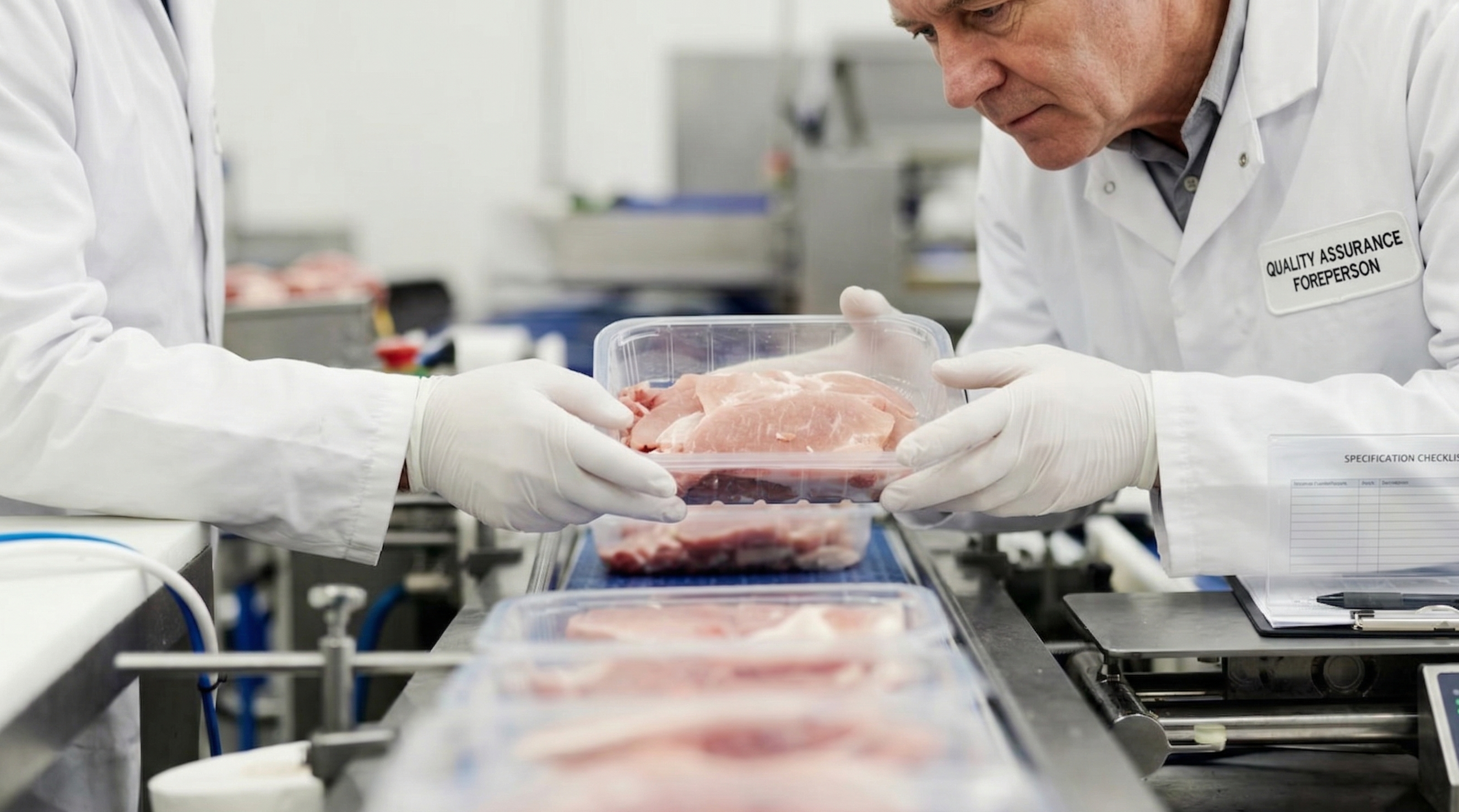
For food safety and regulatory compliance, SAP’s Quality Management (QM) module is paramount. It allows companies to define rigorous inspection plans and checkpoints at every stage, from receiving raw materials to final product dispatch. Integrated with robust Batch Management capabilities, SAP provides end-to-end traceability. If a contaminated ingredient is identified, SAP can instantly trace exactly which batches of final products contain that ingredient and identify every customer who received them, dramatically reducing the scope and cost of a recall.
3. Data-Driven Decisions: SAP Business AI
SAP is embedding AI directly across its application portfolio. In F&B, SAP Business AI is a game-changer for predictive analytics. Machine learning algorithms analyze multiple internal and external data points to generate hyper-accurate demand forecasts. This enables companies to:
- Reduce Food Waste: Better forecasting prevents overproduction, minimizing spoilage of raw ingredients and finished goods.
- Optimize Inventory: Holding the right amount of inventory in the right locations reduces carrying costs while improving customer service levels.
- Enhance Production Efficiency: Predictive maintenance using AI can anticipate equipment failure before it happens, reducing costly unplanned downtime.
4. Accounting for the Planet: SAP Sustainability Solutions
SAP is rapidly expanding its portfolio to help F&B companies manage their ESG performance. Tools like the SAP Sustainability Control Tower and SAP Responsible Design and Production enable organizations to:
- Granularly Track Emissions: Quantify carbon emissions across the entire supply chain (Scope 1, 2, and 3), allowing for targeted reduction efforts.
- Manage Sustainable Sourcing: Gain visibility into supplier sustainability ratings and trace the origins of key commodities to ensure ethical and sustainable sourcing.
- Comply with EPR: Manage extended producer responsibility (EPR) regulations, particularly related to plastic packaging and recycling commitments.
5. Mastering Complexity: Integrated Production Planning (PP) & Formula Management
F&B manufacturing often involves managing highly complex and variable recipes (e.g., varying fat content in milk affecting cheese yield). SAP S/4HANA’s Integrated Production Planning (PP) with advanced formula management allows companies to model and simulate changes to ingredients, quantities, and production processes. This facilitates rapid product innovation by enabling R&D teams to quickly calculate the cost, nutritional impact, and potential production constraints of new clean-label or functional food formulations, all while ensuring absolute precision in allergen labeling and regulatory compliance.
From Complexity to Agility
The trends reshaping the food and beverage industry are permanent and pervasive. To navigate this complexity, F&B companies require more than just operational efficiency; they need total visibility, predictive intelligence, and the agility to adapt rapidly to market, regulatory, and environmental shifts. SAP’s integrated technology stack provides the essential digital foundation to move from reactive crisis management to proactive, responsible, and highly efficient business operations delivering on the promise of safe, sustainable, and innovative food for consumers worldwide.
Do you have any questions about Bolders Consulting Group’s services? Or, are you looking for more information regarding our solution development services? Contact Bolders today to learn how we can help transform your business with our solutions!